Is Samantha Really Victorian?
“A Bright Victorian Beauty”
In 1986, original American Girl character Samantha Parkington was introduced to the world as "a bright Victorian beauty, an orphan raised by her wealthy grandmother."
If we want to be pedantic (and we do), then it’s not really correct to call Samantha “Victorian.” By the strictest definition, the Victorian Era ends in 1901 with the death of Queen Victoria herself. By the time Samantha’s stories begin in 1904, we are firmly in the Edwardian Era of the 1900s. But that’s only if we want to use British naming conventions. Perhaps neither term makes sense for an American Girl.
Catalog readers of the 80s immediately noticed the inaccuracy. The Making of American Girl (2026) notes that “some sharp-eyed shoppers wrote to the company to call out what they viewed as a mistake in the catalog copy.” Pleasant Company’s customer service department defended the word choice with a stock response, at least for a time.
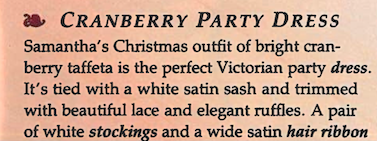
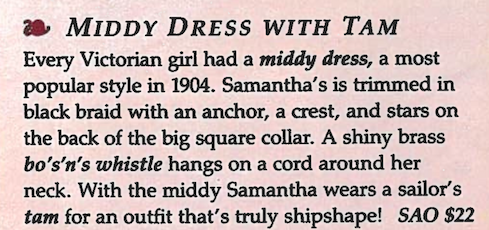
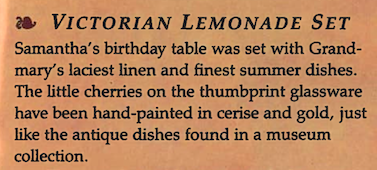
The Samantha pages in Pleasant Company catalogs from the 80s and 90s are full of the word “Victorian,” but the term starts to fall out of favor by the end of the 90s. In the 2000s, she’s usually called “a generous girl with a curious nature living in an exciting new century.” Her era is often termed “the turn of the century.” In the 2010s, American Girl scrubbed historical specificity from the rebranded BeForever line. Most materials from this era don’t give any particular characterization to Samantha’s time, instead labeling her “a rebel with a hairbow.” Today, in the most recent Character Encyclopedia, American Girl says only that Samantha and her family “live in a time of great change.”
Even so, I’m happy to defend the use of “Victorian” to describe Samantha and her collection. Let’s keep in mind that periodization is always an arbitrary business.
Queen Victoria’s reign has firm start and end dates, but the Victorian era in culture does not. The fashions and customs associated with the era did not magically end in 1901.
This is essentially the same argument made in that early customer service stock response, as quoted in The Making of American Girl:
“Although Samantha technically lived in the Edwardian period, the influence of the Victorian period was very obvious in 1904 furnishings, architecture, and clothing. The influence was particularly felt in every aspect of social life and standards.”
A Doll for the Victorian Revival
It can be helpful to call Samantha “Victorian,” because that’s how she was thought of by her creators. In fact, Victoria was considered as a name for the character, pitched as embodying the “country Victorian” aesthetic.1
Samantha’s development in the mid-1980s fell squarely within a “Victorian Revival” in America. Catalogs of children’s clothing were full of plaids, high collars, ruffles, and boxy pleats. Some of the “dress like your doll” outfits offered by Pleasant Company for girls weren’t far off from options available at the mall.
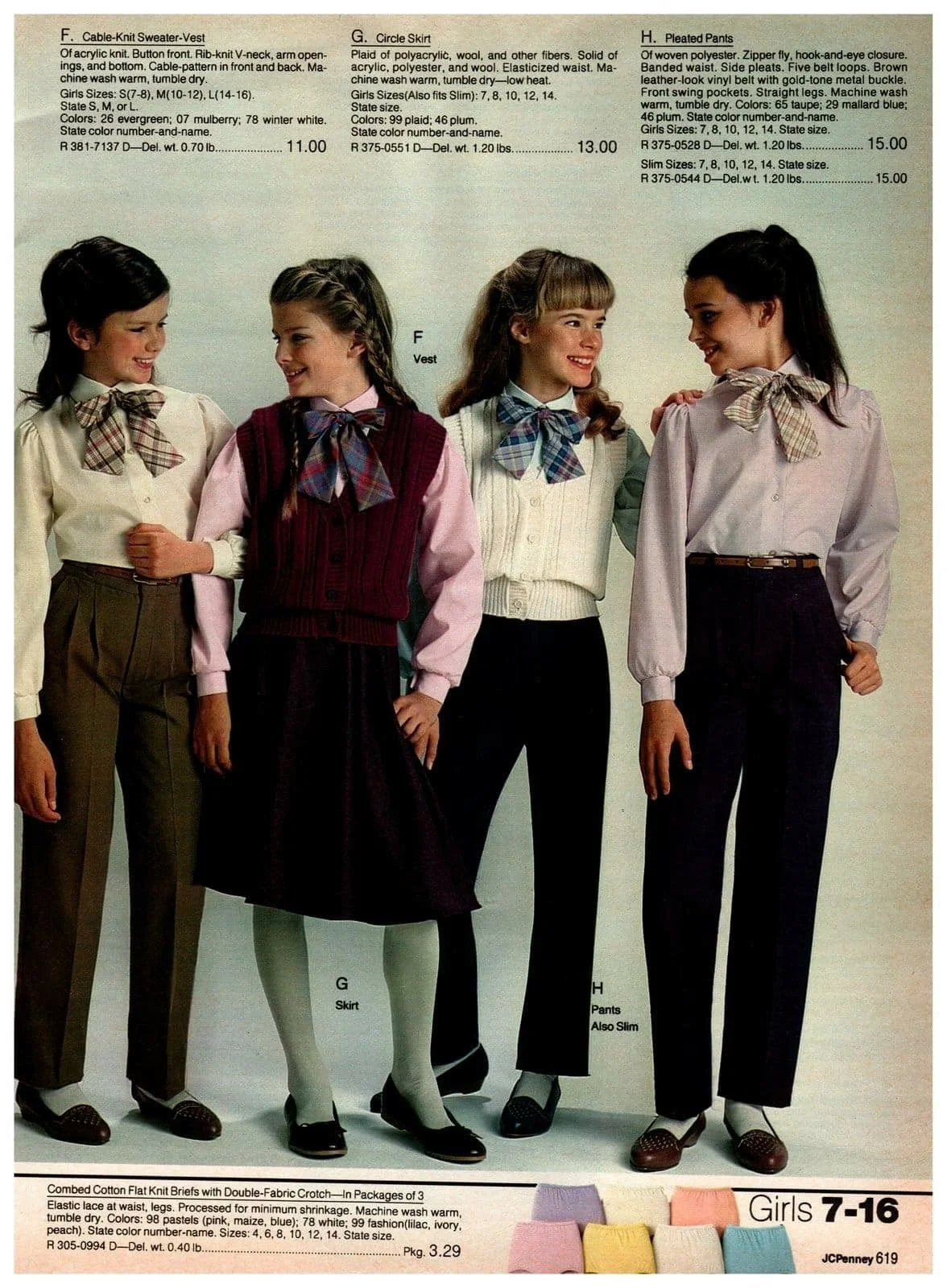
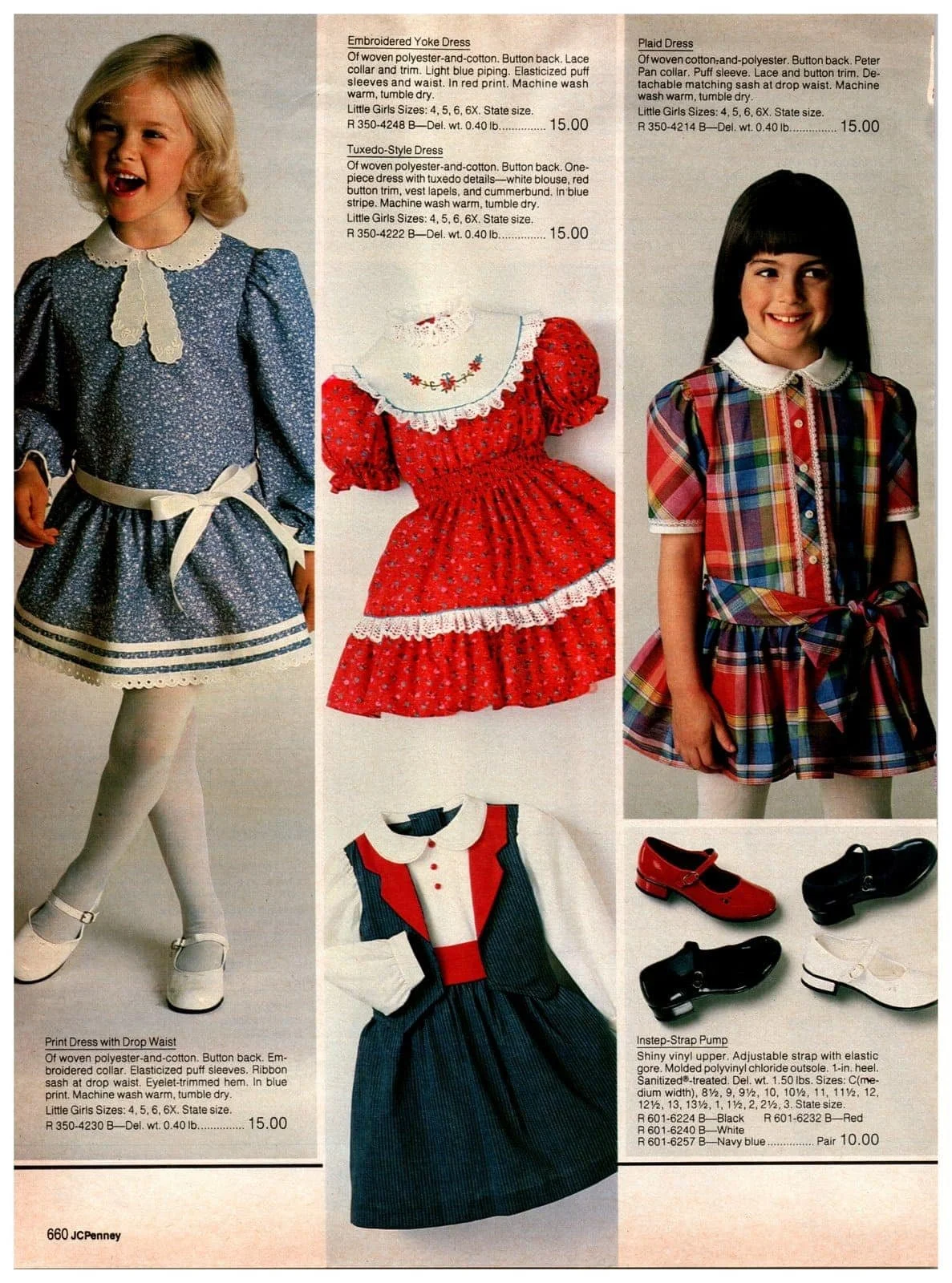
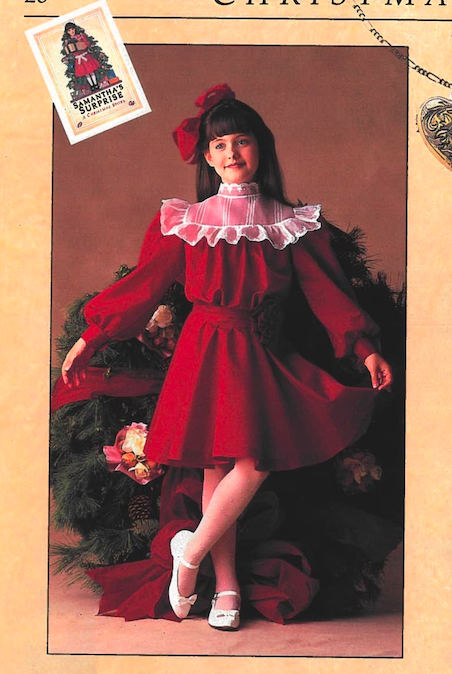
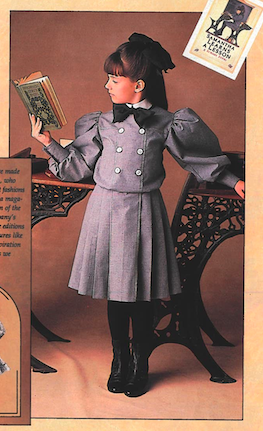
Some of Samantha’s stories could be mistaken for tales of the technical Victorian era.
Books like Samantha’s Surprise and Samantha Saves the Day are confined to domestic and natural settings and deal with Samantha’s family life and inner world. They could easily take place in the 1880s or 1890s with little to no change to the text. Other books, like Happy Birthday, Samantha and Changes for Samantha put the characters outside the home, forcing encounters with a rapidly changing world.
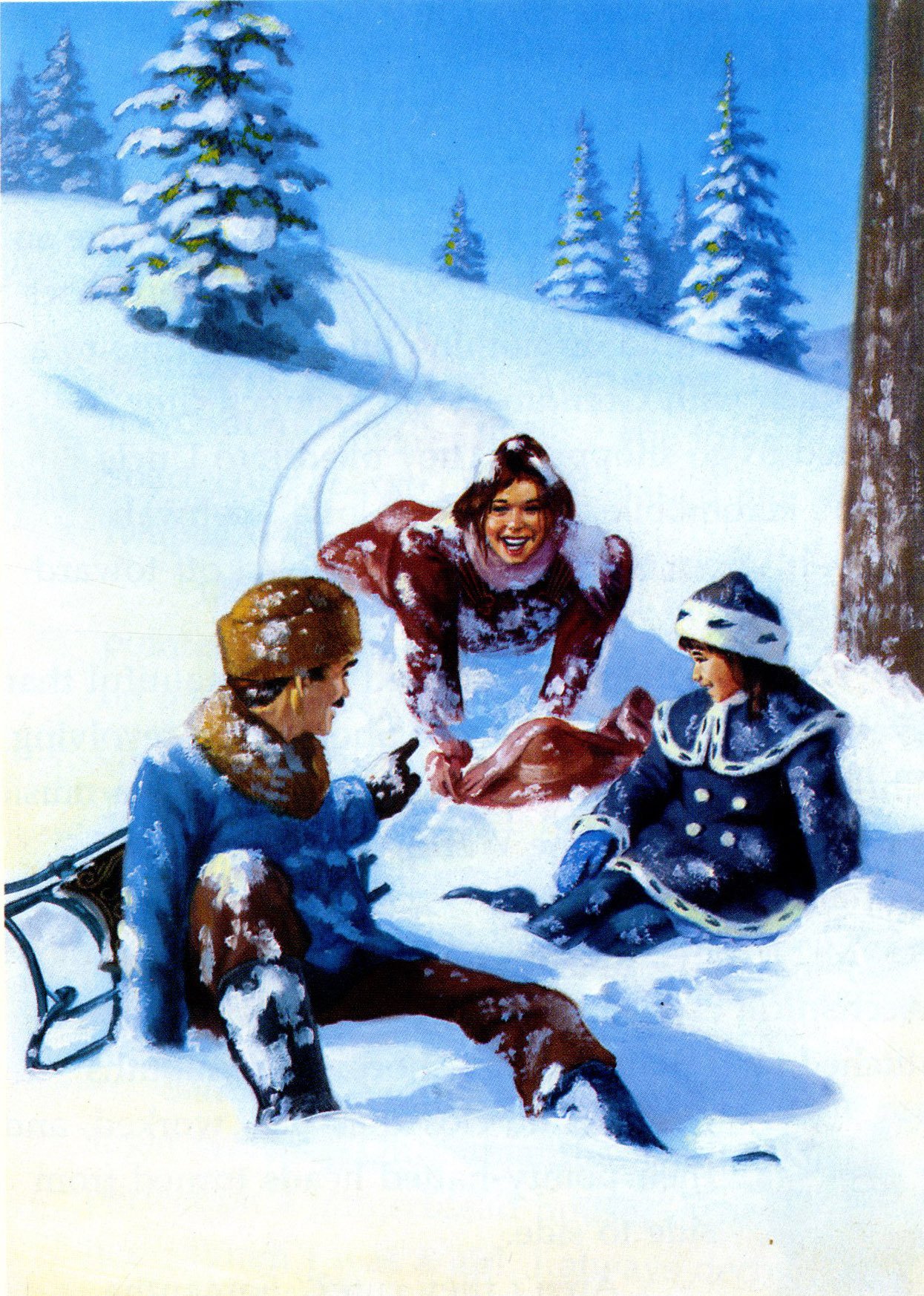 Nancy Niles, Samantha’s Surprise, 1986
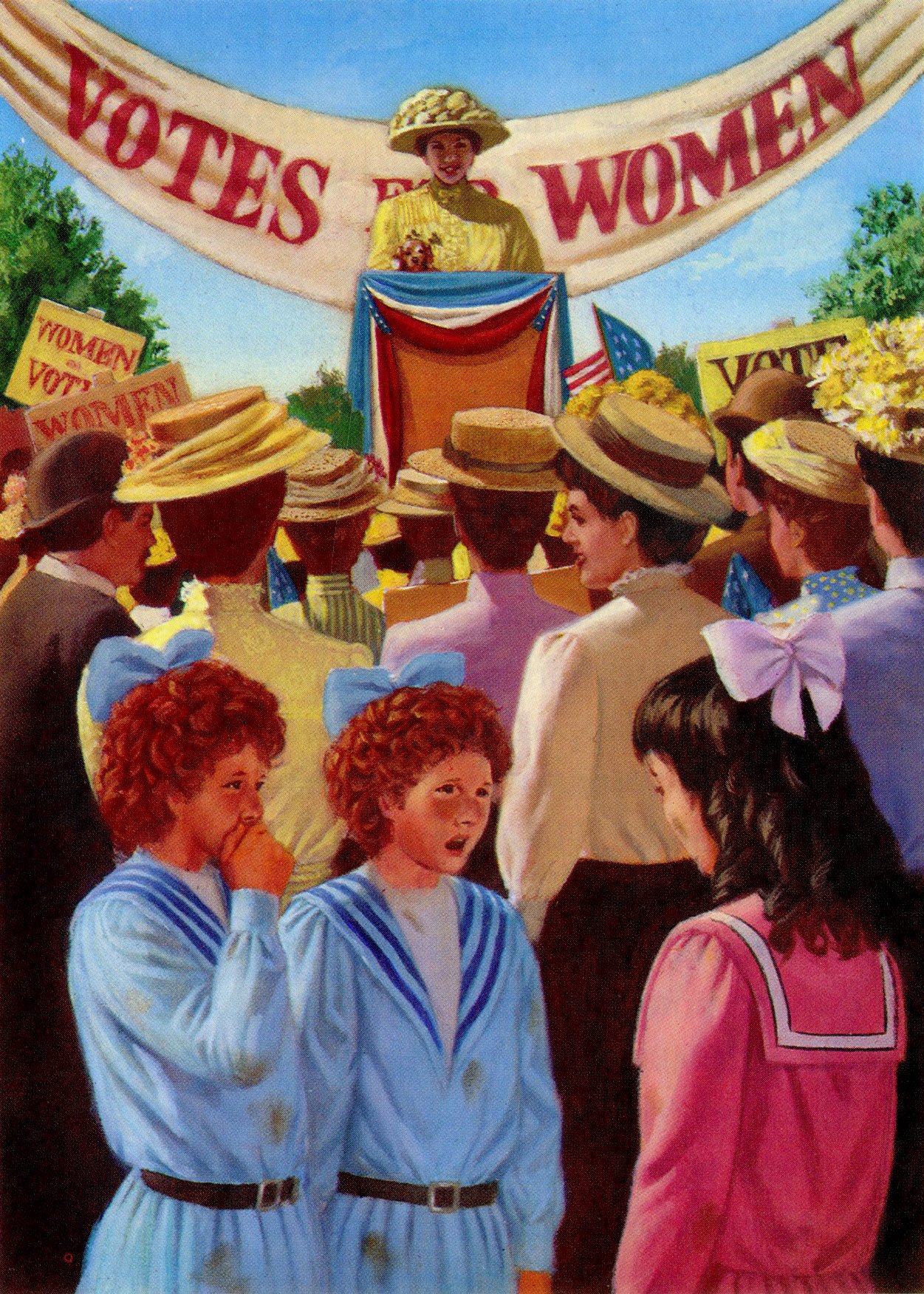 Nancy Niles, Happy Birthday, Samantha, 1987
Today, the American Girl website copy reflects this tension: “Samantha is growing up in 1904, as the restrictive Victorian age is giving way to the more permissive Edwardian era.”
As readers with outside knowledge of historical periodization, we can sometimes forget that the characters don’t have this context. Samantha and Grandmary don’t know that they are at the tipping point between major eras. This is even more true for Samantha’s wealthy family than it would be for many other Americans in 1904. They don’t know that, in many ways, their lifestyle is already anachronistic. The world has already changed; the new normal just hasn’t caught up with them yet.
Samantha: a History
Samantha Parkington has had a long life as a character. After her introduction, she was sold for 22 years before being briefly retired from 2009 to 2014. She was rebooted with a new look and collection in 2014 as part of the “BeForever” rebrand of the American Girl historical line, then slowly phased out in the late 2010s. Since then, Samantha dolls and books have been inconsistently available.
In 2026, American Girl will release Samantha: The Next Chapter, an adult novel by Fiona Davis following grown-up Samantha in the 1920s. I’ll update this web guide when the book is out!
Samantha and her world have changed throughout her 40-year lifespan. While the classic 1980s collection leans into the Victorian Revival aesthetic, later additions have a noticeably different style. As a sleeker silhouette came into fashion in the 90s and 2000s, American Girl eased up on Samantha’s drop waists and voluminous sleeves. The Nellie O’Malley doll collection is technically contemporary to Samantha’s, but feels much more Edwardian.
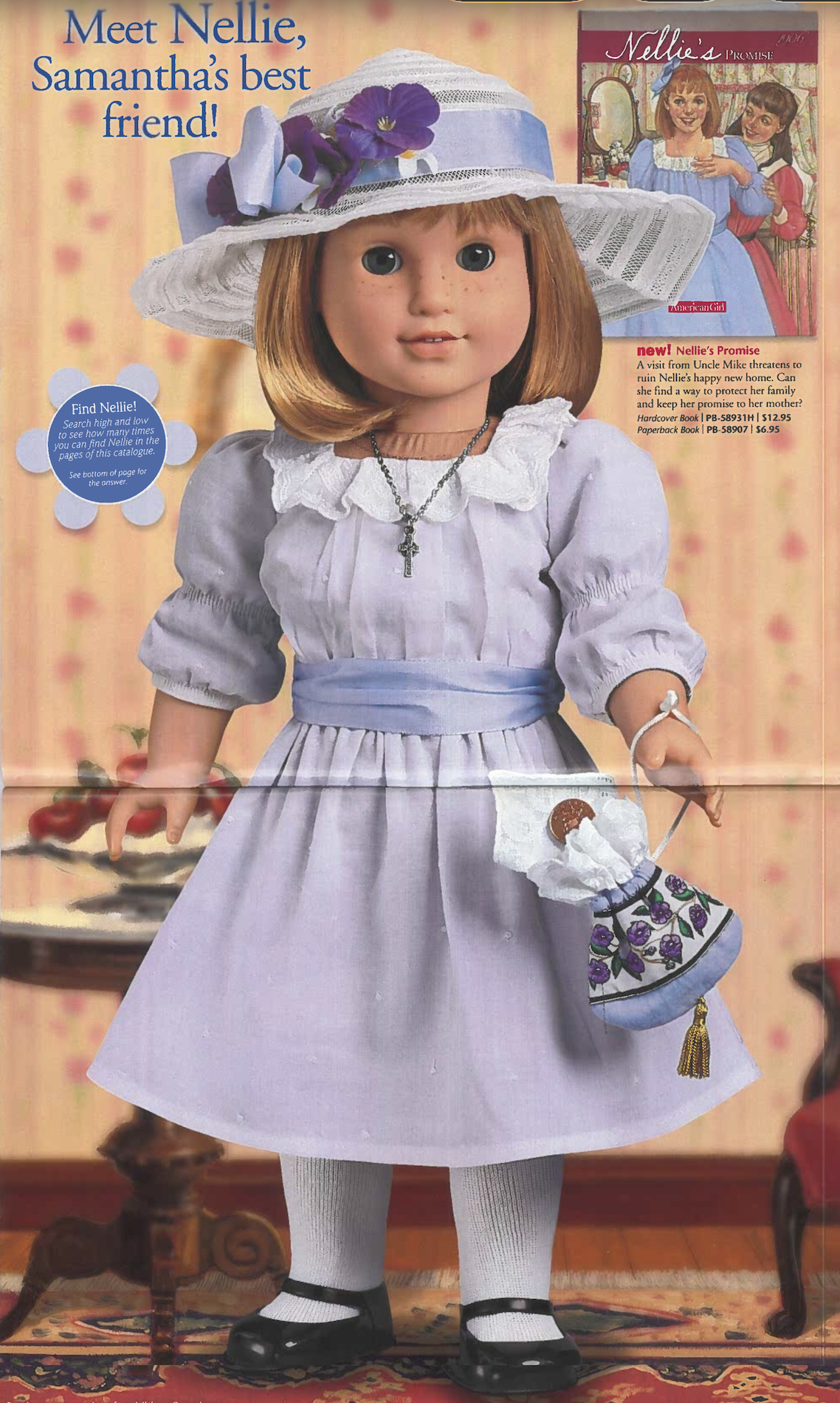
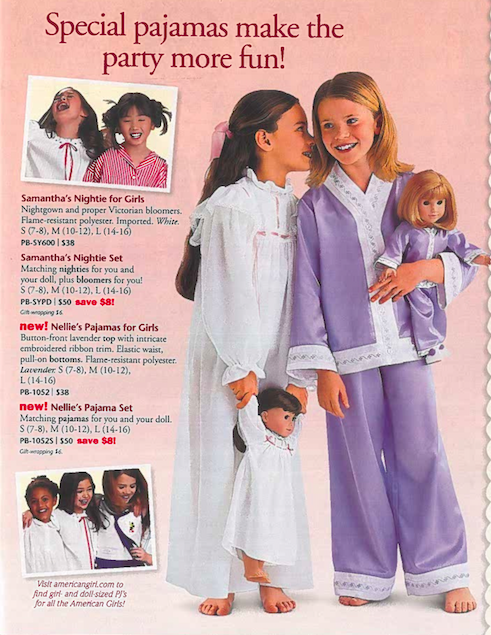
1 The Making of American Girl, edited by Jodi Goldberg (American Girl Publishing, 2026)