Women’s Suffrage in the Samantha Stories
Samantha and the Suffragettes
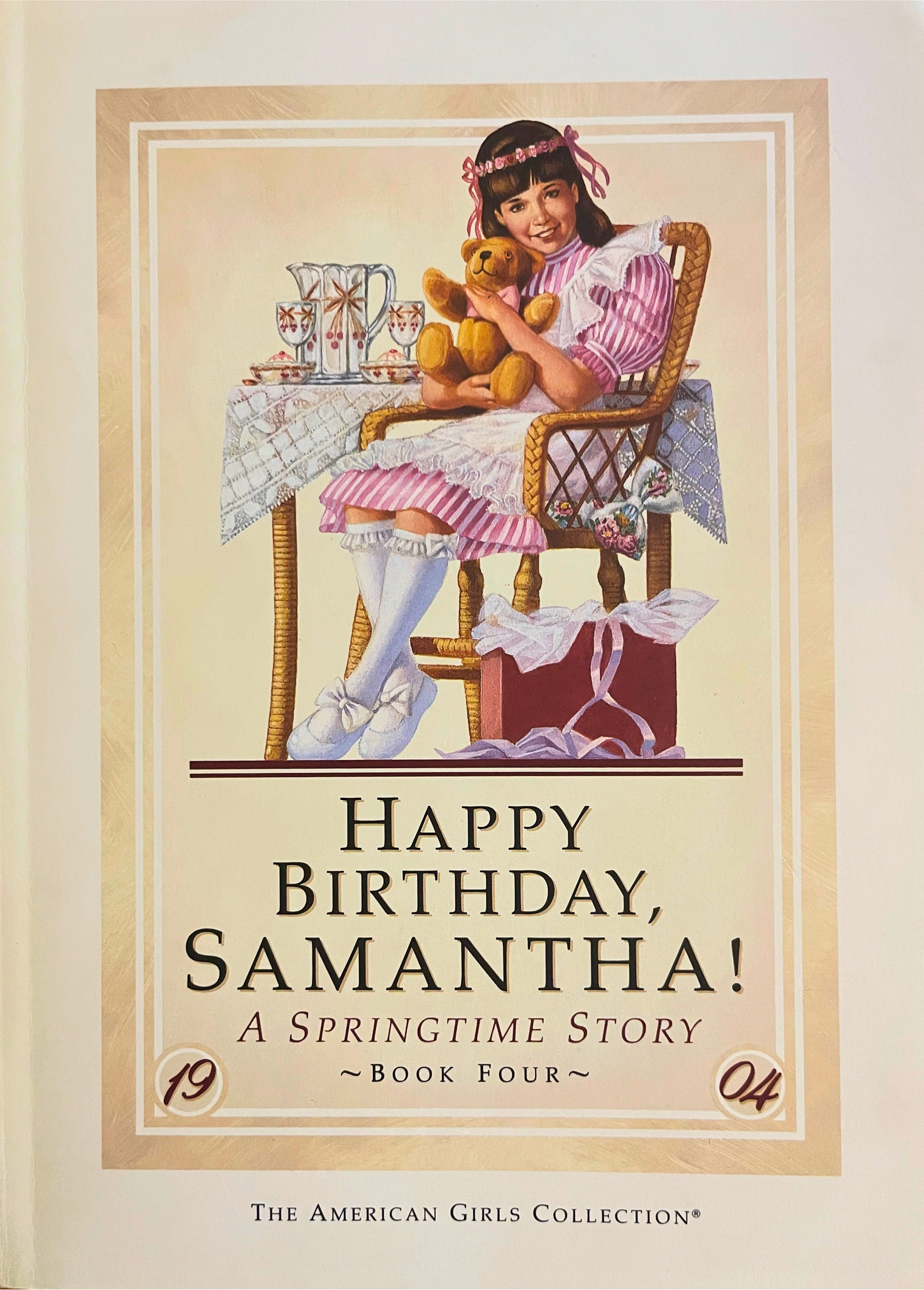
In the 4th book of the Samantha series, we leave the small town of Mount Bedford for the first time. For her 10th birthday, Samantha is treated to a trip to New York City, where she’s dazzled by the hustle and bustle outside the window of the horse-drawn cab. Grandmary is less amused.
The cab passes Madison Square Park, where a group of women are hanging banners across the entrance.
(Happy Birthday, Samantha by Valerie Tripp, 1986, first edition, page 28)But Samantha was fascinated. "What's happening here?" she asked Grandmary.
"Well, it appears that a group of women are having a meeting in that park," Grandmary replied.
"Who are they?" Samantha asked.
"They're suffragettes," Grandmary answered. "They think women should be able to vote, so they get together and make a ruckus about changing the laws." She sat up very straight. "It's all just newfangled notions."
The cab turned down a quieter street and Samantha sat back. She was still very curious about the meeting in the park, but she could tell by the look on Grandmary's face that she should not ask any more questions about it.
The pair meets up with Samantha’s glamorous Uncle Gard and his new wife, Aunt Cornelia, along with Cornelia’s two little sisters, twins Agnes and Agatha. The adults make plans to go shopping.
(first edition, 30-31)"I'll shop at O'Neill's, of course," replied Grandmary. "I never go any farther."
"There's a fine new shop on Fifth Avenue that's closer than O'Neill's," said Uncle Gard. "What was the name of that store, Cornelia?"
Grandmary patted his arm and smiled. "Don't trouble yourself to remember, Gardner," she said. "I shall go to O'Neill's. I've shopped there for more than thirty years. I'm too old to change my ways now."
"O'Neill's is near Madison Square Park," said Aunt Cornelia slowly. "That area may be quite crowded today. There's a meeting in the park."
"I know," said Grandmary. "We passed it on our way from the station. Those suffragettes were already blocking traffic." She shook her head. "In my opinion, ladies should not gather in public places. Especially not to carry on about this voting nonsense."
"Nonsense?" Aunt Cornelia asked. Her voice rose ever so slightly.
"Of course," said Grandmary. "Voting is not a lady's concern. It never has been. I see no reason to change things now. Those suffragettes are making spectacles of themselves. They should stay at home where ladies belong."
Everything gets awkward.
Agnes and Agatha exchange a look and then look down at their food. Cornelia looks like she wants to say something, and then doesn't. Samantha definitely wants to ask more questions, but she doesn't. Gard swoops in with a subject change, and everyone lets the topic drop.
Cornelia allows the girls to take her puppy for a walk. She has… somewhere else to be. The twins get the bright idea to push the dog in Samantha’s new doll pram, which immediately goes wrong. The dog jumps from the pram and bolts down the street, leading the girls on a mad chase through the city. He leads them straight down Fifth Avenue to Madison Square Park.
The twins pull back– they don’t want to follow the dog into the park.
(first edition, 47-48)"Oh, no!" Agnes gulped. "This is Madison Square Park! Where the suffragettes' meeting is!"
"Quick! Let's get out of here!" said Agatha in a panic.
"No," said Samantha. "We've got to get Jip. Grandmary won't mind if we're in the park for just a minute to get the dog."
"It's not Grandmary we're worried about," interrupted Agnes. "It's Cornelia. She's here. And if she sees us, she'll be furious. She thinks we're back in Gramercy Park."
"Cornelia?" Samantha gasped. "What's she doing here?"
"She's at the meeting about women voting," Agatha said quickly. "We heard her tell Gard she was coming. He said Grandmary wouldn't like it. But Cornelia said she could think for herself and she was coming anyway."
Samantha was very confused. What was Cornelia doing with the suffragists? Grandmary said these women were making spectacles of themselves. Was Cornelia doing something wrong?
The girls dart into the park, hoping to get the puppy out as quick as they can. But the dog has already found Cornelia, who isn’t just attending the meeting– she’s speaking.
(first edition, 49)Cornelia's voice was strong and firm as she went on. "The time has come for all of us to speak out. We must stand up for what we believe is right!" she said. "We must make up our own minds. The time has come to change the old ways. Women must vote!"
When Cornelia is done speaking, she seeks out the girls. Samantha decides to stay put and take accountability. The girls apologize very humbly and Cornelia accepts.
They realize it's time to meet Grandmary at the ice cream parlor. With no time to change clothes, the girls show up sweaty and rumpled.
At Tyson’s, the old-fashioned soda fountain, they meet up with Grandmary. Samantha comes clean about the whole story, except for seeing Cornelia– but Grandmary already knows.
"I know you were on the platform," said Grandmary. "I saw you. I was at the meeting myself."
"You were?" everyone gasped.
"Yes," said Grandmary firmly. "I was on my way here to Tyson's. But there were so many people around the park that I couldn't get by. When I saw you up on the platform, Cornelia, I thought perhaps I ought to stay and listen." Grandmary took Cornelia's hand. "My dear," she said, "I must admit that what I saw and what I heard gave me a bit of a surprise. I've always said that I'm too old to change my ways, but I've changed my mind today."
Grandmary touched her forehead with her handkerchief. Samantha saw that her hat was tipped back a little, as if she'd turned around very suddenly. "You and the other ladies who spoke today were simply saying that women should stand up for what they think is right. That's exactly what I believe, too. And if that's what voting will give us a chance to do, then I think women should vote. The time for change has come."
Cornelia smiled at Grandmary. "Yes, it is time to change the old rules," she said. "And that's what makes this a wonderful time for these young ladies to be growing up!"
"Well, growing up is what we've come to celebrate, isn't it?" asked Grandmary. "Shall we have our ice cream?"
She turned to Samantha. "Peppermint for you, my dear? Or would you like to try something new today?"
"No, thank you," smiled Samantha. "Peppermint is my old favorite. There are some things that are just too good to change."
And everyone clapped. The end.
The Samantha books often end this way: an abrupt and complete victory for the good guys. In the last 2-3 pages, all conflicts are suddenly resolved. But even within the Samantha series, I find this book’s ending particularly unsatisfying.
Women’s Suffrage in Samantha’s Story
This book's depiction of the suffrage movement is… frustrating.
If you have some existing familiarity with the suffrage movement, one detail might have caught your eye: the use of the term “suffragette.”
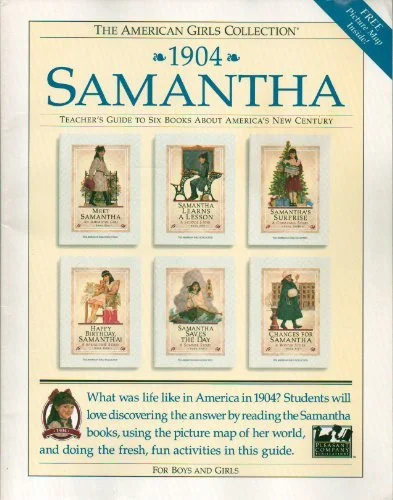
Actually, this word is only used in the very earliest printings of the book. By the 1990s, it was swapped out for “suffragist.” The Teacher’s Guide explains:
We, the writers and editors of the American Girls Collection, keep learning too. After the Samantha books were published, we found out that Americans who fought for women's suffrage preferred to be called suffragists. The English preferred suffragette. As the Samantha books are reprinted, suffragette is being changed to suffragist.
This might seem like a small regional difference, but in this era, these two terms had completely different connotations and usage.
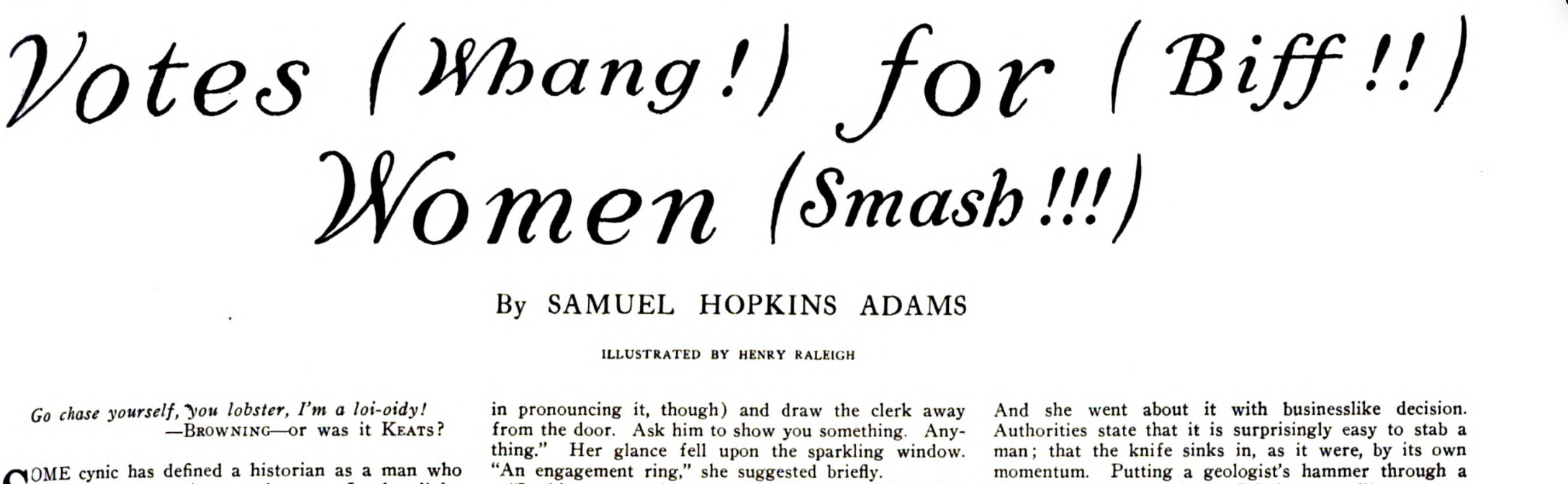
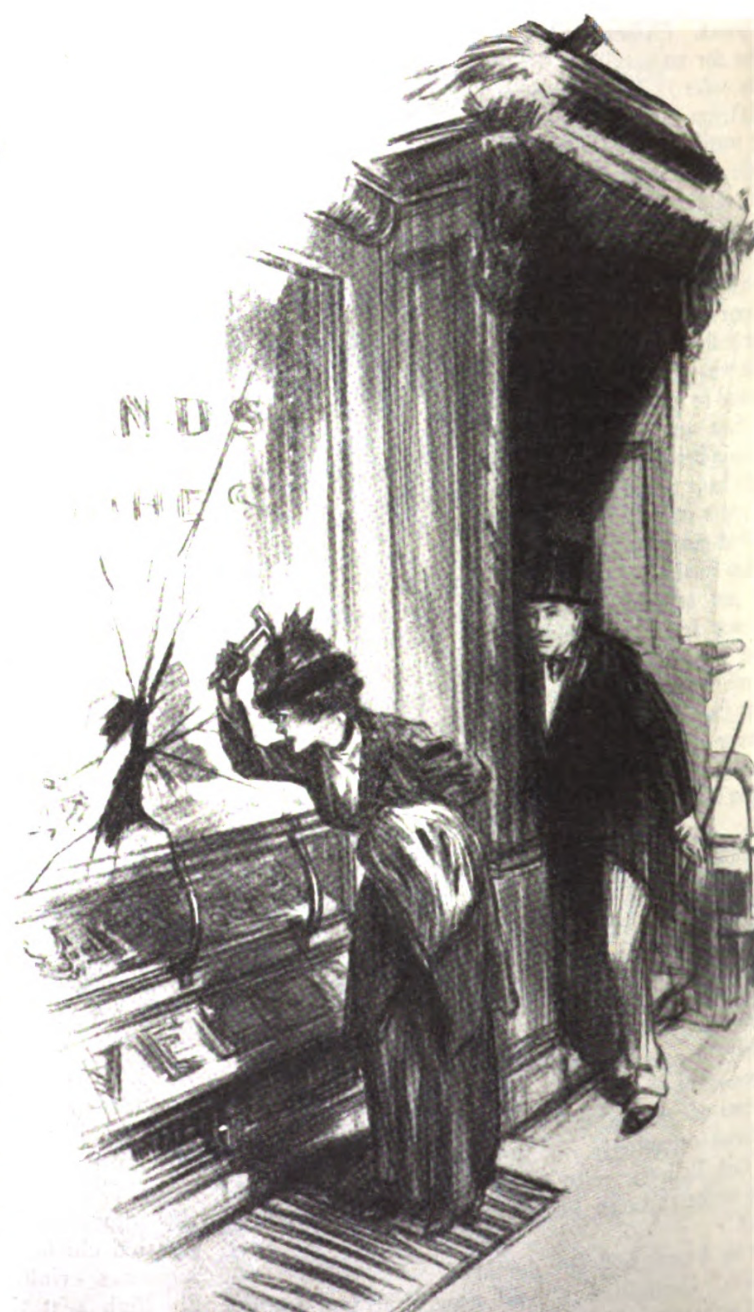
Notable journalist (and “muckraker”) Samuel Hopkins Adams humorously compared the two in a 1912 piece for Collier’s:
Samuel Hopkins Adams, "Votes (Whang!) for (Biff!) Women (Smash!!!)," Collier’s 49 (April 1912), 11–12From the American suffrage movement has sprung a conundrum, not new but illuminating:
"What is the difference between a suffragist and a suffragette?"
And the answer:
"A suffragist is a lady who takes tea with Mrs. Belmont, and a suffragette is a woman who goes out and bites a perfectly good policeman."
Despite [the examples in the article], I think I prefer the American suffragist and her methods to the British suffragette. But the latter will win first.
As the Teacher’s Guide notes, "suffragette" originated in Britain as a disparaging term that was meant to belittle women activists. Many of those same activists later reclaimed it for themselves, but even then, it was a pretty loaded term. It carried a lot of baggage when it traveled to the US. According to historian Frances Bzowski:
Frances Diodato Bzowski, “Spectacular Suffrage; Or, How Women Came Out of the Home and into the Streets and Theaters of New York City to Win the Vote.” New York History 76, no. 1 (1995): 56–94.In the American press, "the use of the word 'suffragette' can be compared to the disparaging term 'women's libber' of the 1970s. When it was used to refer to American groups, the purpose was either to emphasize their more militant methods or to ridicule and deprecate the women."
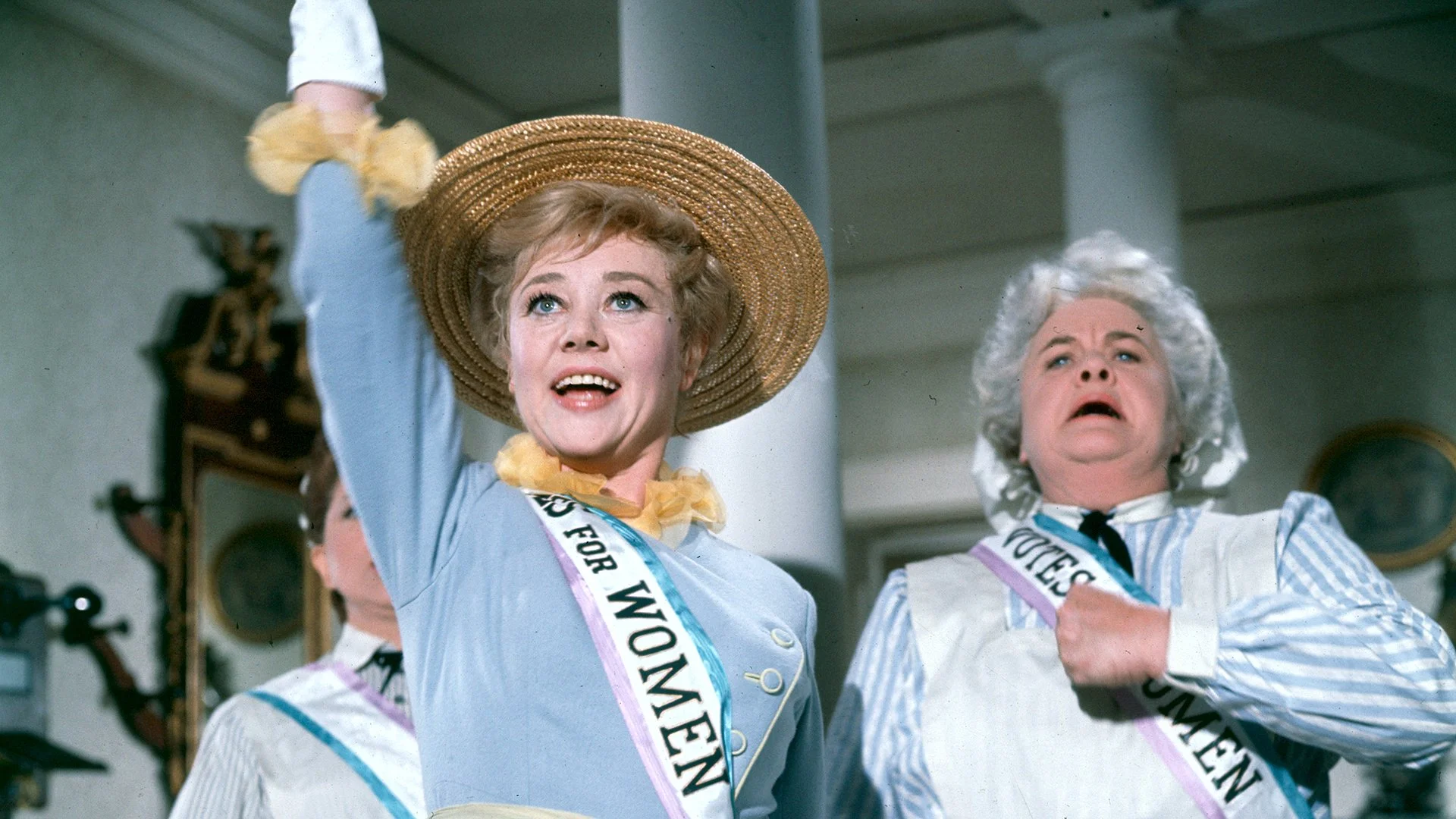
Cornelia would have called herself a “suffragist.” But “suffragette” is catchy. It’s way cooler. And that’s the word that’s lived on in the popular consciousness. (In part, I’m sure, due to the song in Mary Poppins.)
I feel an instinct to be judgy about this error.
Isn’t this the sort of small-seeming mistake that betrays a lack of research? After all, if the creators were consulting primary sources and engaging with the historical scholarship, they’d never confuse those terms, right?
It turns out to be complicated. As usual.
The real historical event
Based on my research, the entire suffrage rally scene is historically impossible. Nothing like it would have occurred in 1905, when this book takes place.
We do have a pretty similar real-life event a few years later. There was an outdoor suffrage meeting in Madison Square Park with women speakers. It's so similar that I think there's a good chance this real-life event inspired the scene in Happy Birthday, Samantha.
But that real event took place at the end of 1907, and is considered by multiple historians to be the first of its kind. That’s why it is so often referenced: it was New York's first public demonstration where women gave speeches about suffrage. There would not have been any event like it prior to 1907.
This is not a big deal. The American Girl stories simply fudged the timeline by 2 years. I don’t mind that they shifted the year of a historical event a bit.
I do mind that the stakes and impact of that event are completely rewritten.
At that real 1907 meeting, several prominent organizers attended but refused to speak. Bzowski says this about the event, which was “an open-air meeting in Madison Square, the first time that New York suffragists had taken to the streets”:
Bzowski, “Spectacular Suffrage”Mrs. Boorman Wells from England and Maud Malone of the Harlem Equal Rights League were featured speakers, but Carrie Chapman Catt and other mainstream women refused to speak at the meeting because they considered it too unfeminine an action.
Whether the rally happened in 1905 or 1907 – at any point in the decade – it was a super big deal for a woman to give a public outdoor speech. Doing so would put a woman on the fringes of the suffrage movement itself.
Saying it again for emphasis: most other suffragists, women who were already transgressing social norms in their political activity, considered the women speaking at this meeting to be radical.
In this time and place, a woman who is prepared to get up on a raised platform and publicly orate in the out-of-doors is a woman that has surrendered her reputation. She knows that her name will be trashed in the papers – in fact, that’s the point. She wants to be seen.
This is not the kind of political action you could or would compartmentalize from your social life. It's not something that is possible to do in secret. It is part of a wholesale rejection of society's constraints for your sex.
If Cornelia is doing this, she is not in society. She has forfeited being called a lady.
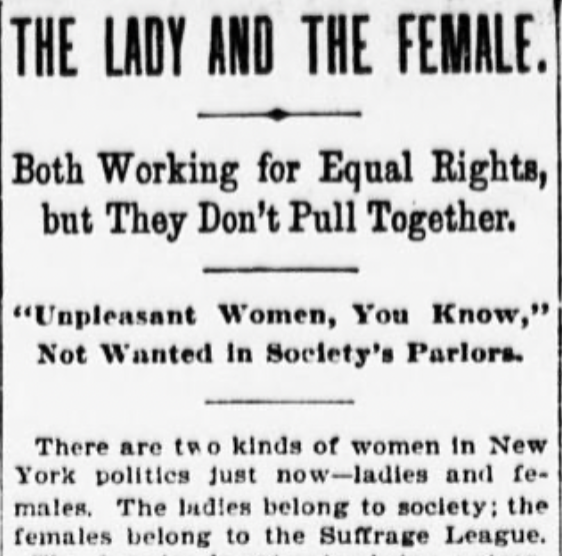
In my Samantha videos, I continuously return to the concept of a “lady” as distinct from a “woman.” This is a perfect example. It may have been theoretically possible for a woman to do what Cornelia did– but it was not possible for a lady to do so. As an 1894 Evening World article declared:
(Nell Nelson, “The Lady and the Female,” Evening World, (New York), April 14 1894. LoC scan. quoted in Santangelo, Lauren C. “‘The Merry War Goes On’: Elite Suffrage in Gilded Age Manhattan.” New York History 98, no. 3/4 (2017): 343–66.)"There are two kinds of women in New York politics just now—ladies and females. The ladies belong to society; the females belong to the Suffrage League."
Aunt Cornelia’s Politics
Which brings us to Cornelia and her politics.
This is the frustrating part to me, because Cornelia doesn’t have politics.
I don't know what Cornelia believes in besides “standing up for what she believes in.” And what she believes in, the thing that she's standing up for, is that she should stand up for what she believes in.
We have very few clues to any kind of position, or even a value or philosophy, that Cornelia might have, and the clues we do have are very contradictory.
Let's try to put Cornelia in her historical context, even ignoring that we've fudged the dates a little. As I’ve said, whether it's 1905 or 1907, giving a speech at a public outdoor meeting would put a woman on the fringes of the American suffrage movement.
Her name will be in the papers. Her name will be trashed in the papers. And that is part of the point– it’s meant to be a transgressive, shocking act. This is not the kind of political action you could or would compartmentalize from your social life. It doesn’t make any sense to do this in secret. It only happens as merely one part of a larger rejection of society's constraints for your sex.
As an upper-class newlywed woman in New York City in the 1900s, Cornelia has open avenues for engaging in politics in a socially accepted way. While it was shocking for a lady to give a speech in public, it wasn’t unusual for her to discuss politics in other venues.
By the end of the 19th century, NYC had multiple elite suffrage organizations that specifically catered to upper-class women. You could even join one that met at Sherry’s! Cornelia could spend time writing letters, hosting salons, and donating funds through the existing structure of a private social club.
Cornelia is not taking that route, which can only be a deliberate choice. She is both politically and socially out of step with the other suffragists in her community. She’s not just at odds with old-school women like Grandmary; she’s at odds with the other women of her own age and status that want the vote. She’s a real rebel.
But that doesn’t fit with anything else we see of Cornelia as a character. Sure, she’s young and lively and fun. She’s trendy and forward-thinking. But she’s not deeply subversive. We don’t see her violate social norms in any other context, whether she’s with Grandmary or not. The boldest thing she does on-page is ask her maid to put her tea tray on a stool so she can sip while making Valentine’s with Samantha on the parlor floor. In her own home.
She appears to be pretty conventional in every other aspect of her life: her dress, her attitude, her manners, her relationship with the family, her marriage to Gard.
At Gard’s direction, Cornelia specifically conceals her suffragist activity from Grandmary. (Again, this would be impossible. I cannot emphasize that enough. Everyone would know, and everyone knowing was the whole point.)
To my eyes in 2026, this rally looks incredibly tame. Genteel, even. So it’s important to remember that what Cornelia is doing is extraordinarily uncommon and very brave. She stands to lose so much by getting up on that podium, and she does it anyway. That’s what gives the action weight.
But in the world of Happy Birthday, Samantha, those stakes do not exist. You can be a radical fringe feminist at 1 and turn around and have tea with the Four Hundred at 2.
Cornelia’s hard-core agitation has so little impact on her life that socially-connected and observant Grandmary has no idea it’s even happening. It’s pure coincidence that Grandmary even finds out! But in the end, it’s fine that everyone finds out.
In this book, Cornelia risks nothing. Except, possibly, an uncomfortable conversation. She risks nothing, which makes sense, because she believes in nothing. She's fighting for nothing.
Here is what we hear of her speech. In theory, this is only a few sentences out of a longer speech, but since these are the lines included in the book, we must assume they are the most relevant and impactful. These are the only lines Samantha hears to completely comprehend what women’s suffrage is all about. Presumably, this is exactly the same thing that convinces Grandmary to change her entire worldview.
"The time has come for all of us to speak out. We must stand up for what we believe is right!" she said. "We must make up our own minds. The time has come to change the old ways. Women must vote!"
I’m sorry. I just don’t think that’s how this works.

Movements mean something
Maybe this is too bold and sweeping of a generalization, but I’m going to make it anyway: Nobody, in the history of ever, has been able to mobilize a politically impactful and socially disruptive movement on the basis of “it’s time to make up our minds.” Nobody has built enough momentum to amend the Constitution on the basis of “speak out for what you believe is right.” These phrases might pop up in rhetoric, but they aren’t the sum total of a movement’s motivation.
It wouldn’t be fair to expect this book to reflect the full breadth of the American suffrage movement. Happy Birthday, Samantha has barely a few pages to communicate the movement to a child reader, perhaps for the first time. It would be ridiculous for me to expect a complete manifesto from Cornelia.
But I don’t think it’s crazy to expect something. To get a glimpse of a single argument for suffrage. To get any indication that this is a movement with stakes and goals and coherent argument.
I don't really care that the date of that real-life suffrage meeting was bumped up a couple years. I don't even care about the terminology mix-up. I care that the stakes of the suffrage movement have been completely erased. I care that the goals and motivation of any kind of suffragist have been totally rewritten. I care that the book seems so uninterested in what might make a woman become a suffragist, on either a personal or a political level.
We see a complete transformation in Grandmary. In a few pages, she goes from sniffing in disapproval at the "newfangled notions" to completely agreeing with and aligning herself with women's suffrage as a political position.
At the end of the book, she tells the family:
"I've always said that I'm too old to change my ways, but I've changed my mind today. You and the other ladies who spoke today were simply saying that women should stand up for what they think is right. That's exactly what I believe, too. And if that's what voting will give us a chance to do, then I think women should vote. The time for change has come."
How easy! I don’t know why suffragists made such a big deal out of things! The hunger strikes and carriage-chaining and decades of agitation seem quite silly, don’t they.
Samantha’s stories often end with this kind of high-speed resolution. The book introduces a fraught topic that almost breeds dramatic interpersonal tension… until that tension is popped like a balloon. Unlike the Kirsten, Felicity, or Addy books, this series refuses to allow any disagreement or tension among “good” characters. Nobody believes anything.
And I don’t think “nobody believes anything” is a helpful or authentic perspective on one of the most turbulent periods in American history.
But here’s something interesting
Returning to that real-world 1907 rally: if such a demonstration was wildly out of the norm, how did it happen in the first place?
The answer: British suffragettes.
Prior to the turn of the century, those cultural differences between the American and British suffrage movements, the ones Adams’ Collier’s article riffed on, were very clear.
However, in the 1900s, British influence starts to reshape the American movement. In the years immediately after Samantha’s 10th birthday, American streets started to see the same sort of public demonstrations that had swept London years prior.
Activists like Alice Paul and Harriot Stanton Blatch that had personally lived in England and studied under suffragettes like Emmeline Pankhurst. They led organizations devoted to more public, disruptive, and “militant” methods. One such group organized that 1907 rally in Madison Square Park. This was a group influenced by the British movement, which was named in honor of that movement.
They were called the American Suffragettes.
Go figure.